


A year ago I was preparing to embark on a new journey. I moved away from home to pursue a professional career that would challenge me on a daily basis. As of today, I have completed half of the training program at Quinnipiac University and can honestly say I could not be happier. The transition into a fast paced learning environment was quick and challenging, but I, along with my classmates, survived to talk about it.
The standards we are held to at Quinnipiac University allow us to demonstrate our abilities, not just to ourselves, but to those who teach us, learn from us and those who are looking to pursue a graduate-level education. Upon completion of the first year, about a week ago, we quickly transitioned into the second year of the training program. The second year consists of rotating through different clinical affiliations in 5-8 week blocks. The majority of our affiliations are in Connecticut, but we also have four sites in different states. All of the affiliations are in top medical institutions which help us develop our training and ultimately shape our professional careers.
My experiences in the last year as a pathologists’ assistant student have allowed me to grow and mature into the professional I will be upon graduation. All of my experiences have also earned me a scholarship to attend the annual conference held by the American Association of Pathologists’ Assistants in San Francisco. The scholarship was awarded to twelve students, two from Quinnipiac -- Congrats Nicole St.Pierre!--, from the nine pathologists’ assistants program in the nation based on an essay. The essay topic asked the students to describe why we felt we were deserving of the scholarship and how attending the annual conference would benefit us. I decided to write about all the wonderful opportunities I experienced as part of the reputable pathologists’ assistants program at Quinnipiac University. As a scholarship recipient, I will have to present a poster at the conference. I have decided, with the help of my current mentor, to base my poster presentation on a practical aspect of our profession as it relates to neurological tumors.
I am confident that the in-class training I received as first year student will allow me to succeed as I rotate throughout our program’s clinical affiliations. I know this year will be filled with new experiences, opportunities and mentors that will continue to shape me as an individual and a professional. I am so grateful to be able to represent Quinnipiac University at all of these top hospitals, teaching centers and the AAPA conference.
-- Nancy
Nancy graduated in 2009 from Baylor University with an undergraduate degree in Forensic Science and a minor in Chemistry. Subscribe to our feed for more posts from Nancy!
Growing in the Pathologists' Assistant program
Reflections of a Physician Assistant student

Needless to say, I did just fine during my six weeks in Emergency Medicine and I did well on my end-of-rotation exam. In fact, I received a compliment from my attending doctor a week into my rotation that helped give me a little more confidence in my education and abilities. He told me that my knowledge base was much more than he would have expected for someone who was on his first clinical rotation and who never worked in Emergency Medicine before. The nurses, ER techs and PAs were just as kind and supportive. Many of them asked if I would consider working there after I graduated. Now if that isn’t enough to inflate your ego, I don’t know what is! (Note: This clinical site would go on to be the recipient of the Excellence in Clinical Education award by the class of 2010 which I felt was well-deserved.)
As the year continued and I went from clinical site to clinical site, I felt I started to really grow as a “clinician-to-be.” Working in a variety of practices and specialties helped me gain a better understanding of what I value in a workplace and where my true passion lies. Prior to starting clinicals, I thought that I would either be a primary care PA or a surgical PA and that I would absolutely hate pediatrics. As it turned out, I could never see myself as a surgical PA and I love working with kids. A big part of me still loves primary care and I discovered that my true passion had a name: preventative medicine. Although it’s easier to write a prescription and send a patient on his/her way, I feel the best way to help someone is to educate them in ways to prevent disease in the first place.
So here I am, sitting at a Starbucks in Boston thinking about where I’ve been and where I have yet to go. I was fortunate enough to arrange an elective rotation in a community clinic in Boston, which has been going very well. Everyone there has been so friendly that I was beginning to wonder if there was something in the water! =) If all continues to go well I may find Boston to be my new home. Regardless of where I end up, I will always look back fondly at my time at Quinnipiac University.
--Ryan
Ryan graduated in 2005 from the University of Washington with an undergraduate degree in Biology. Subscribe to our feed for more posts from Ryan!
First Year vs. Second Year of the QU Physician Assistant Program
 |
As the semesters progress throughout the year the workload also increases. I remember thinking at the end of my first year “if I had tests this often with this much material in the first summer semester then I probably would have cried.” It is amazing how much you grow as a person and you get pushed further emotionally and physically then you have ever been pushed before. Many people compare the first year to trying to drink out of a fire hydrant; I found this analogy to be quite true. First year is tough, there is no sugar coating it and this is something everyone needs to know when they apply to PA school; however this one year will give you a life time of knowledge.
Once the first year of PA school is over everyone usually takes a sigh of relief that it is done. Majority of the class will travel to the national AAPA conference just prior to starting the clinical year. This allows for a nice get-a-away, in addition the professors and students get to enjoy time together outside of school. Last year we all went to Atlanta and this May we are all going to Las Vegas. I am excited already!
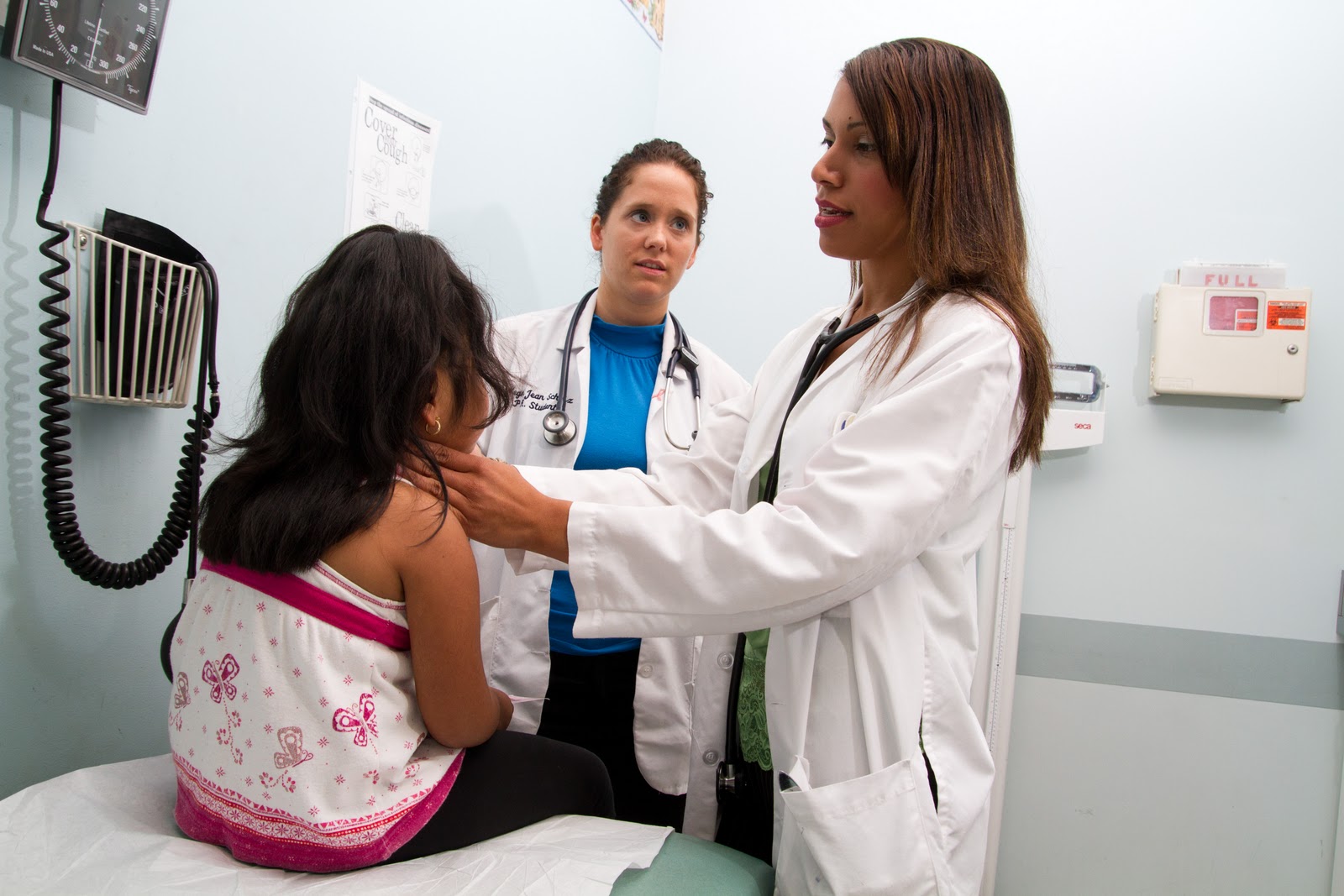
Second year is totally 100% the opposite of first year; starting in June of your second year you will go out on rotation and do nine rotations in total: seven core and two electives. The seven core rotations are psychiatry, primary care, surgery, pediatrics, emergency medicine, obstetrics and gynecology and internal medicine. Each core rotation is 6 weeks and there is an exam at the end of each rotation on the specialty that you were just in. Additionally there are two elective rotations that are each 4 weeks long and can be picked by the student in any specialty. I chose to do one in education because I want to eventually be a PA educator and the other in primary care.
The second year is fantastic! You really get a taste of what it is like to be a physician assistant as well as gaining a tremendous amount of medical knowledge and confidence.
The clinical year lasts from June to June and after the clinical year ends the final summer semester begins. This last semester consists of courses such as ethics and physician assistant graduate seminar which helps prepare you for interviews. The white coat ceremony is held in the beginning of August; this ceremony marks the end of physician assistant school and the start of your career as a PA!
--Carly
Carly graduated in 2009 from Quinnipiac University with an undergraduate degree in Health Science Studies. Subscribe to our feed for more posts from Carly!


