


A year ago I was preparing to embark on a new journey. I moved away from home to pursue a professional career that would challenge me on a daily basis. As of today, I have completed half of the training program at Quinnipiac University and can honestly say I could not be happier. The transition into a fast paced learning environment was quick and challenging, but I, along with my classmates, survived to talk about it.
The standards we are held to at Quinnipiac University allow us to demonstrate our abilities, not just to ourselves, but to those who teach us, learn from us and those who are looking to pursue a graduate-level education. Upon completion of the first year, about a week ago, we quickly transitioned into the second year of the training program. The second year consists of rotating through different clinical affiliations in 5-8 week blocks. The majority of our affiliations are in Connecticut, but we also have four sites in different states. All of the affiliations are in top medical institutions which help us develop our training and ultimately shape our professional careers.
My experiences in the last year as a pathologists’ assistant student have allowed me to grow and mature into the professional I will be upon graduation. All of my experiences have also earned me a scholarship to attend the annual conference held by the American Association of Pathologists’ Assistants in San Francisco. The scholarship was awarded to twelve students, two from Quinnipiac -- Congrats Nicole St.Pierre!--, from the nine pathologists’ assistants program in the nation based on an essay. The essay topic asked the students to describe why we felt we were deserving of the scholarship and how attending the annual conference would benefit us. I decided to write about all the wonderful opportunities I experienced as part of the reputable pathologists’ assistants program at Quinnipiac University. As a scholarship recipient, I will have to present a poster at the conference. I have decided, with the help of my current mentor, to base my poster presentation on a practical aspect of our profession as it relates to neurological tumors.
I am confident that the in-class training I received as first year student will allow me to succeed as I rotate throughout our program’s clinical affiliations. I know this year will be filled with new experiences, opportunities and mentors that will continue to shape me as an individual and a professional. I am so grateful to be able to represent Quinnipiac University at all of these top hospitals, teaching centers and the AAPA conference.
-- Nancy
Nancy graduated in 2009 from Baylor University with an undergraduate degree in Forensic Science and a minor in Chemistry. Subscribe to our feed for more posts from Nancy!
Growing in the Pathologists' Assistant program
Reflections of a Physician Assistant student

Needless to say, I did just fine during my six weeks in Emergency Medicine and I did well on my end-of-rotation exam. In fact, I received a compliment from my attending doctor a week into my rotation that helped give me a little more confidence in my education and abilities. He told me that my knowledge base was much more than he would have expected for someone who was on his first clinical rotation and who never worked in Emergency Medicine before. The nurses, ER techs and PAs were just as kind and supportive. Many of them asked if I would consider working there after I graduated. Now if that isn’t enough to inflate your ego, I don’t know what is! (Note: This clinical site would go on to be the recipient of the Excellence in Clinical Education award by the class of 2010 which I felt was well-deserved.)
As the year continued and I went from clinical site to clinical site, I felt I started to really grow as a “clinician-to-be.” Working in a variety of practices and specialties helped me gain a better understanding of what I value in a workplace and where my true passion lies. Prior to starting clinicals, I thought that I would either be a primary care PA or a surgical PA and that I would absolutely hate pediatrics. As it turned out, I could never see myself as a surgical PA and I love working with kids. A big part of me still loves primary care and I discovered that my true passion had a name: preventative medicine. Although it’s easier to write a prescription and send a patient on his/her way, I feel the best way to help someone is to educate them in ways to prevent disease in the first place.
So here I am, sitting at a Starbucks in Boston thinking about where I’ve been and where I have yet to go. I was fortunate enough to arrange an elective rotation in a community clinic in Boston, which has been going very well. Everyone there has been so friendly that I was beginning to wonder if there was something in the water! =) If all continues to go well I may find Boston to be my new home. Regardless of where I end up, I will always look back fondly at my time at Quinnipiac University.
--Ryan
Ryan graduated in 2005 from the University of Washington with an undergraduate degree in Biology. Subscribe to our feed for more posts from Ryan!
First Year vs. Second Year of the QU Physician Assistant Program
 |
As the semesters progress throughout the year the workload also increases. I remember thinking at the end of my first year “if I had tests this often with this much material in the first summer semester then I probably would have cried.” It is amazing how much you grow as a person and you get pushed further emotionally and physically then you have ever been pushed before. Many people compare the first year to trying to drink out of a fire hydrant; I found this analogy to be quite true. First year is tough, there is no sugar coating it and this is something everyone needs to know when they apply to PA school; however this one year will give you a life time of knowledge.
Once the first year of PA school is over everyone usually takes a sigh of relief that it is done. Majority of the class will travel to the national AAPA conference just prior to starting the clinical year. This allows for a nice get-a-away, in addition the professors and students get to enjoy time together outside of school. Last year we all went to Atlanta and this May we are all going to Las Vegas. I am excited already!
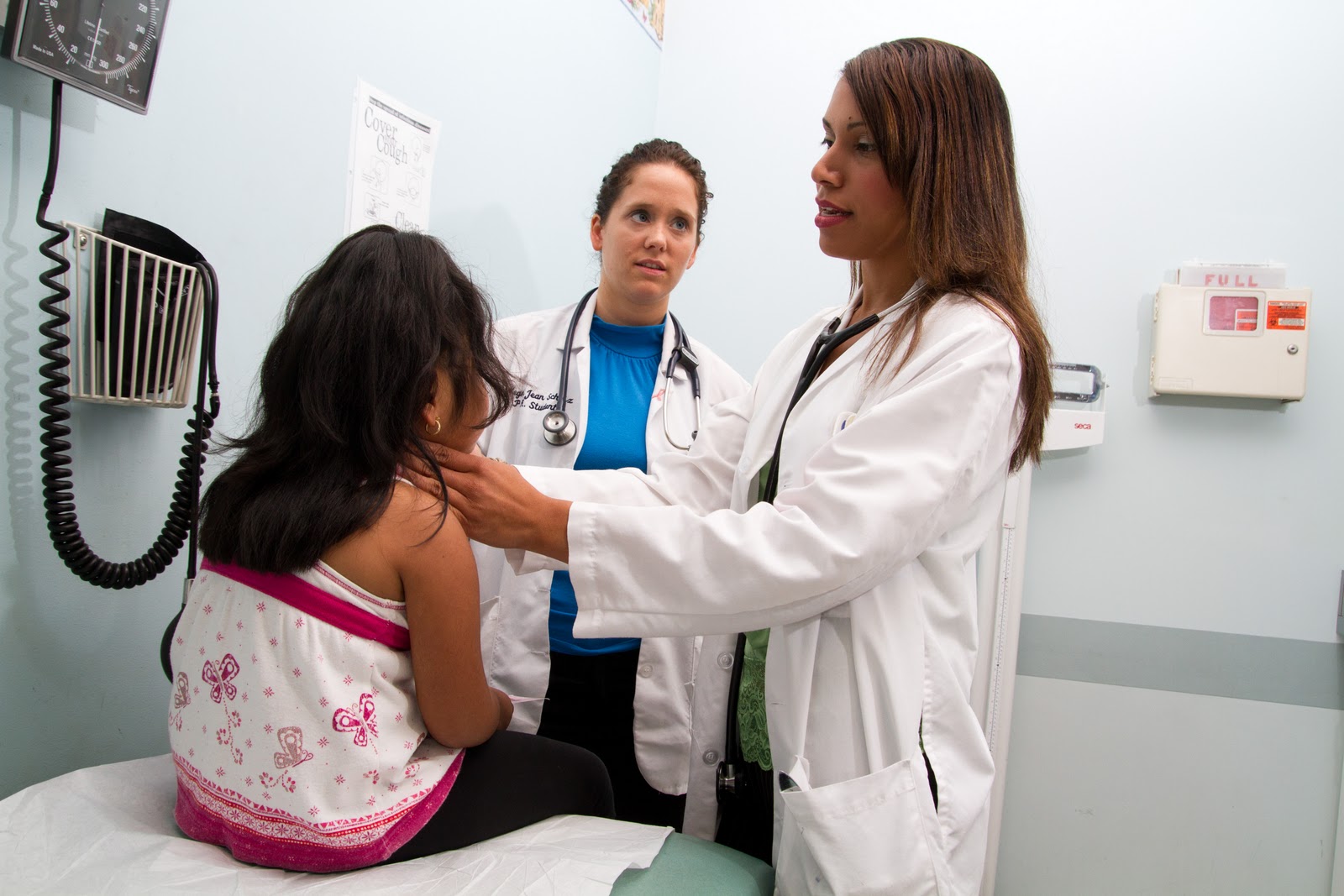
Second year is totally 100% the opposite of first year; starting in June of your second year you will go out on rotation and do nine rotations in total: seven core and two electives. The seven core rotations are psychiatry, primary care, surgery, pediatrics, emergency medicine, obstetrics and gynecology and internal medicine. Each core rotation is 6 weeks and there is an exam at the end of each rotation on the specialty that you were just in. Additionally there are two elective rotations that are each 4 weeks long and can be picked by the student in any specialty. I chose to do one in education because I want to eventually be a PA educator and the other in primary care.
The second year is fantastic! You really get a taste of what it is like to be a physician assistant as well as gaining a tremendous amount of medical knowledge and confidence.
The clinical year lasts from June to June and after the clinical year ends the final summer semester begins. This last semester consists of courses such as ethics and physician assistant graduate seminar which helps prepare you for interviews. The white coat ceremony is held in the beginning of August; this ceremony marks the end of physician assistant school and the start of your career as a PA!
--Carly
Carly graduated in 2009 from Quinnipiac University with an undergraduate degree in Health Science Studies. Subscribe to our feed for more posts from Carly!
Spring Semester in the Pathologists' Assistant Program

The spring semester is the last in-school semester for the Pathologists’ Assistants program. The classes are geared toward teaching us all the terminology and grossing techniques we will need when we start clinical rotations in May. Sometime between March and May we will get our clinical rotation assignments based on our preferences for different areas in pathology. The work load for the semester is somewhat increased but also requires more self-discipline. We have to keep up with the class material both in and out of class. Pocket Robbins is a huge lifesaver! Our Robbins textbook is our bible. If you are interested in the QU PA program, look into Robbins: Pathological Basis of Disease. Don’t let its size intimidate you, just embrace it!
I am excited to experience different working environments while working developing my own techniques! I know it will be a bit overwhelming, but it just makes it more exciting. We are all beyond excited for rotations to begin! Applying my knowledge to real-life situations has always been my favorite aspect of learning. Thanks to the wonderful professors in the PA program, I know I’ll be ready when May comes around.
So up to this point, I have done nothing but talk about school and work and more school! But there is some time for fun things! In the summer two of my friends (and classmates) hiked a few trails around town. My favorite was definitely the blue trail in Sleeping Giant Park. We also visited West Rock Park and Wintergreen Lake. We used Friday or Saturday nights as our restaurant exploration time! We visited restaurants, ice cream places and bars in Hamden, New Haven and Cheshire. We were not disappointed! Frank Pepe’s Pizza in New Haven is worth waiting in line for!
-- Nancy
Nancy graduated in 2009 from Baylor University with an undergraduate degree in Forensic Science and a minor in Chemistry. Subscribe to our feed for more posts from Nancy!
What I Wish I Knew Before PA School...
Carly Arena is a second-year Physician Assistant student here at Quinnipiac University. Carly took the time to answer some of the frequently asked questions about living and studying at Quinnipiac.
Where should I live?
Majority of students live in Hamden and some live in New Haven and North Haven. The best apartment complexes to live in Hamden are Town Walk, Aspen Glen, and Sutton Towers. All of the apartments in Aspen Glen are two bedrooms and two full baths. In Town walk there are one, two and three bedroom apartments. Also, Quinnipiac undergraduate students are not allowed to live in Town Walk.
What is “typical” for rent?
A one bedroom apartment is around $1100 and a two bedroom apartment is around $1400.
Is it hard to find housing?
It is very easy to find housing especially in Hamden. Also, the program will be sending an email about finding a roommate and will give you direct links to the best places to live.
Do most PA students live together?
Majority of students do live together however some decide to live on their own.
When should I start my lease?
You should start your lease about two weeks prior to PA school beginning to give yourself plenty of time to move in and get settled.
How far is Hamden from the North Haven campus?
It takes about 10 minutes to get from Hamden to North Haven.
What national banks are in the Hamden/North Haven area?
There are Citizens, Bank of America and TD Bank.
Is there a gym at school?
There are two gyms at Quinnipiac: one is on the main campus and the other is on the York Hill campus which is also in Hamden. Both QU gyms are free to all undergraduate and graduate students. There are other gyms that students are members at in Hamden such as Planet Fitness and LA Fitness.
Where are the “good” places to eat?
In Hamden everyone loves Corner Deli, Ray and Mikes and Eli’s on Whitney. There are tons of great restaurants in New Haven.
Where do people study?
A lot of students study right at the North Haven campus because there are study rooms there. Also, on the main campus there are two libraries: the Arnold Bernhard Library and the Law Library. The Arnold Bernhard is the main library so it is usually packed with undergraduate students. The Law Library is the way to go because it is huge and silent!
When will I get my first refund check from financial aid?
You can expect your check around the second week of June, so plan accordingly!
Should I purchase my medical equipment prior to coming to school?
No, wait until you get to school to purchase your medical equipment because you will get a group discount.
When will I get my mentor?
Mentors will be assigned around mid-April.
Carly graduated in 2009 from Quinnipiac University with an undergraduate degree in Health Science Studies. Subscribe to our feed for more posts from Carly!
My Life as a Physician Assistant Student

Thus far I have completed psychiatry, surgery, primary care and pediatrics. I am currently on my fifth core rotation in emergency medicine. A typical day for me right now entails, getting up at 5:30am and being at work for 6:45am. My shift begins promptly at 7:00am. This is usually a slow time in the emergency department so I will get sign out from the doctor or physician assistant that was on the overnight shift. As the day goes on the waiting room quickly becomes flooded with people of all ages with all sorts of chief complaints. The exciting part of the ED is that you never know what is going to come through the doors.
I see all different patients whether they are complaining of a cough or are having a stroke. My job as the PA student is to go in, get a history from the patient, do a physical exam and then present the case to the attending or physician assistant. Once I present the patient, the attending or PA will ask me what my differential diagnoses are, what labs and diagnostic testing I want to order and if I know the diagnosis then they want to know how I am going to treat it. If the patient has a laceration then I do the suturing; if the patient has a broken limb, I do the casting and splinting and the list can go on and on.
When my shift ends around 7:00pm I am usually exhausted from running around all day however I always leave with a smile on my face. I have found that the physician assistant profession is a very satisfying job and you can really impact people’s lives. I usually will get home around 7:45pm, eat a quick dinner and then get right to studying. I will typically try to study for an hour and then relax and watch TV for an hour before I go to bed around 11:00pm.
--Carly Arena
Carly graduated in 2009 from Quinnipiac University with an undergraduate degree in Health Science Studies. Subscribe to our feed for more posts from Carly!
Pathologists' Assistant Program at Quinnipiac

Pathologists’ assistants carry out increasingly sophisticated procedures, examinations and determinations in clinical laboratories, hospital laboratories and medical research centers. There is a nation-wide demand for pathologists' assistants and according to Indeed.com, the average salary for a pathologist assistant is $100,000.
Upon successful completion of their training, graduates are employed by pathologists in hospital laboratories, clinical laboratories and medical research centers. During the first three semesters of the six-semester curriculum, students concentrate on course work and attend weekly conferences at the Veterans Administration Medical Center in West Haven, Connecticut. These conferences orient them to hospital lab settings and prepare them for intensive clinical training at affiliated area hospitals during the second year.
Though the deadline has passed (the deadline for application is December 15), it is important to start preparing for admission. The Pathologists' Assistant program runs on a different schedule than other graduate programs. Interviews are required for admission and are conducted throughout the year until February, and the six-semester class cycle begins the first week of June. Check out the admission requirements and the curriculum for a deeper look at the program.
The holistic philosophy at the School of Health Sciences produces a stimulating education that is creative, goal-directed, and research-based. For more information on this exciting program contact:
Graduate Health Sciences Admissions
Phone: 203-582-8672 or 1-800-462-1944
E-mail: paadmissions@quinnipiac.edu
With 154 Flavors, Which is the Best One For You?

Some Insight on the PA Program

A Black Friday Special You Won't Find in Any Store

A Physician Assistant Student's Journey at QU

Carly graduated in 2009 from Quinnipiac University with an undergraduate degree in Health Science Studies. Subscribe to our feed for more posts from Carly!


